Bank Impersonation Scams
Bank impersonation scams are getting harder to spot. What a real bank will never do, the warning signs, and exactly what to do if it happens to you.
Willis Cooper Chartered Accountants
16 June 20263 min read
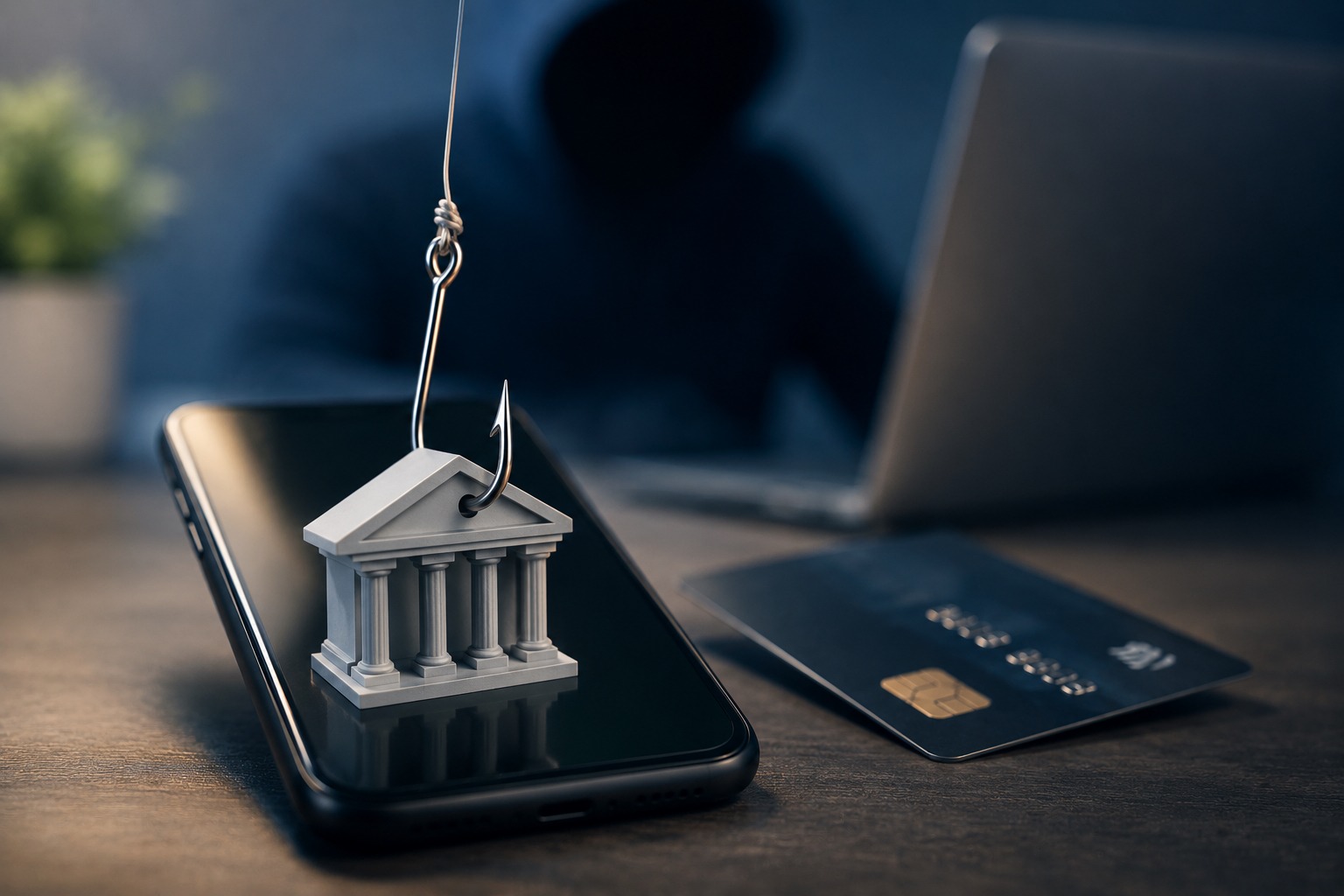
We had a near miss with someone close to us this week, and it’s left us wanting to write something useful. If you’ve ever taken a call like this, or worried about someone in your life who might, this one’s for you.
These scams are catching out all sorts of people right now. Sensible people. Careful people. People who’d have said a week earlier that they’d never fall for it. The scripts have got better, the technology has moved on, and most of us are simply too polite to put the phone down on someone who sounds professional and worried for us.
So if you’ve ever been caught off guard by one of these calls, please don’t beat yourself up. They are designed to work on good people.
A few numbers worth knowing
UK Finance reported that over £1.17 billion was stolen by fraudsters across the UK in 2024. In just the first half of 2025, authorised push payment fraud (the type where you’re persuaded to send the money yourself) added up to £257.5 million, which was 12% higher than the same period the year before.
Around 17% of those cases started through telecoms (calls and texts), and the “fraud team” phone call remains one of the highest-value scams per victim in the country.
Why they work so well now
A few things have shifted in the last couple of years:
• The number on your phone can be faked. Scammers can make it look like the call is coming from your bank’s real number. Please don’t trust caller ID on its own.
• The scripts are very convincing. Calm tone, professional language, just the right amount of urgency.
• They create pressure on purpose. “There’s suspicious activity on your account right now.” “We need to act quickly.” “Please don’t discuss this with anyone.” Panic is the point. It’s what stops people thinking clearly.
A real bank will never
• Ask you to move money to a “safe account”
• Ask for your full PIN, password, or one-time passcode
• Rush you into a decision
• Tell you to keep the call a secret from family, friends, or the police
If any of that happens, please put the phone down. You don’t owe them an explanation, an apology, or a polite goodbye.
What to do if it happens to you
1. Hang up. That’s the first and most important step.
2. Call your bank back using the number on the back of your card. Never a number the caller gave you. If you’d like extra peace of mind, use a different phone (your mobile if the call came in on a landline).
3. Or dial 159. It’s a free service run by Stop Scams UK that connects you safely through to most of the major UK banks.
4. Report it. You can forward suspicious texts to 7726 (free), and report scam calls to Action Fraud on 0300 123 2040 or at reportfraud.police.uk.
Please have the conversation
If you’ve got parents, grandparents, or anyone in your life who might be more vulnerable to this, please take a few minutes to chat it through with them. Not to lecture, just to make it feel normal to put the phone down, and to give them 159 as a number they can lean on.
If something feels off, it almost always is. And it’s never silly to double check.
And if you’re ever unsure, we’re here
Whether it’s a call claiming to be your bank, an unexpected HMRC demand, an invoice that doesn’t look quite right, or anything financial that doesn’t sit well with you, please pick up the phone to us before you do anything you can’t undo. We’d much rather have a quick chat that turns out to be nothing than help anyone pick up the pieces afterwards.
Look after yourselves, and please pass this on to anyone who might find it useful.
Sources: UK Finance Annual Fraud Report 2025 and H1 2025 Fraud Report; NCSC; Stop Scams UK.
Follow
info@williscooper.com
01773 881 045
Company Registration Number: 04076991
Copyright
Willis Cooper Ltd © 2026 All Rights Reserved
Willis Cooper Ltd
Derby Road
Heritage Business Centre
DE56 1SW
Belper
Unit 6
Derbyshire